
The Story Behind This Piece
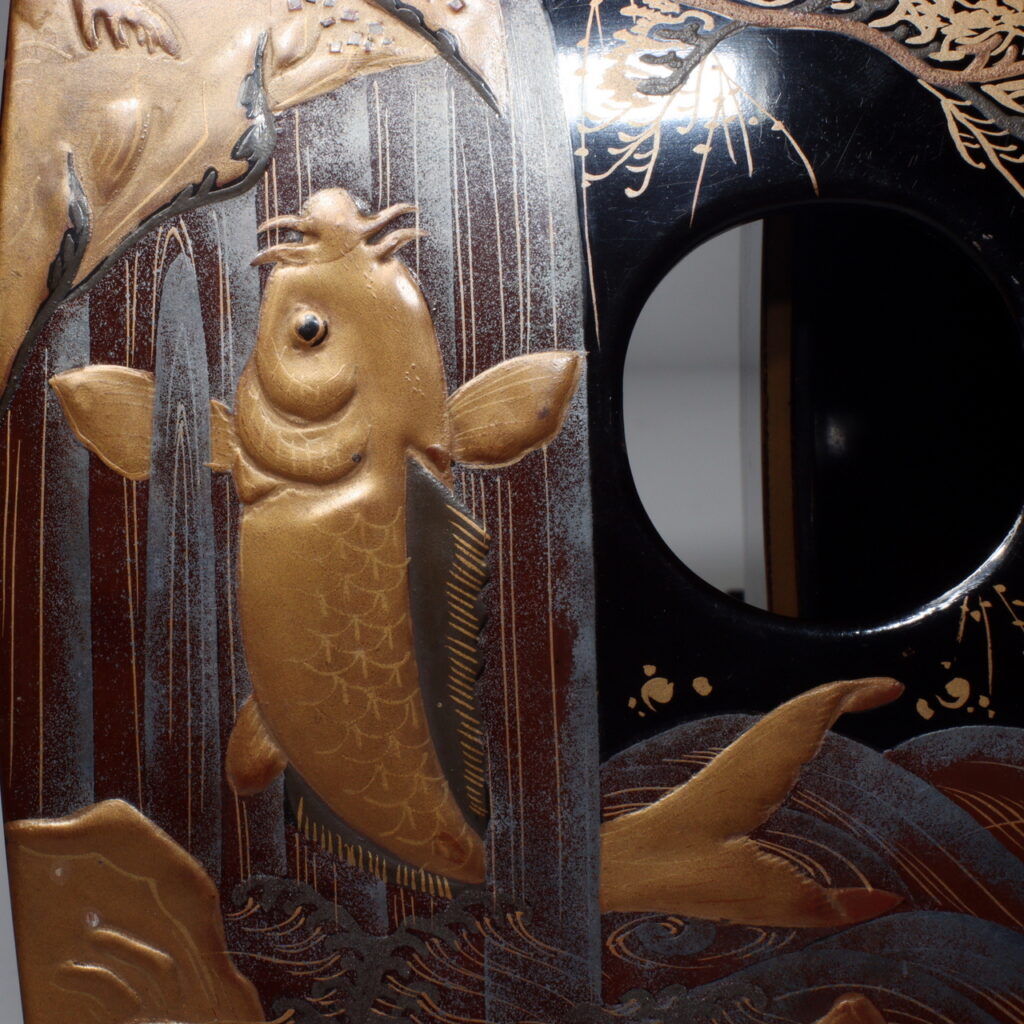
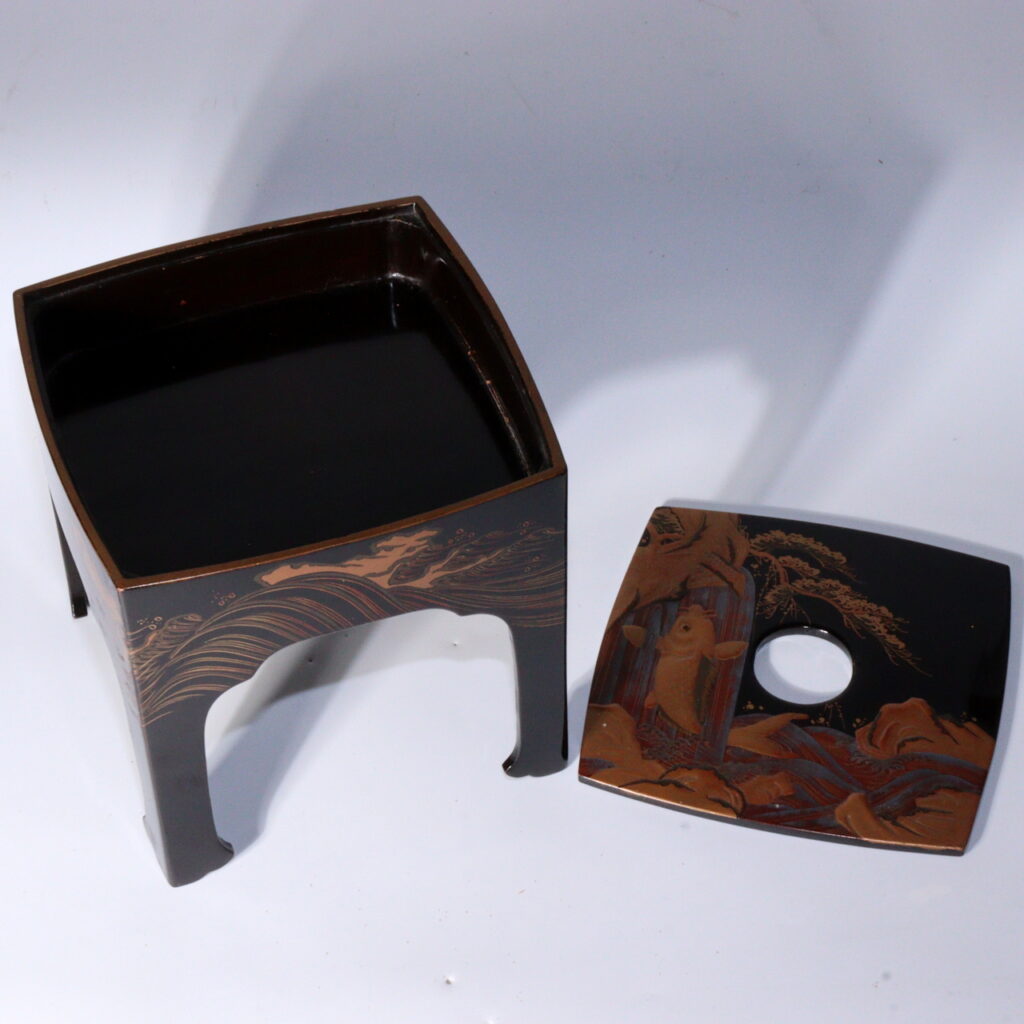
Among the many expressions of Japanese lacquer artistry, few capture both spiritual symbolism and technical mastery as profoundly as this sakazukidai (cup stand) from the late Edo to early Meiji period (mid–19th century). Crafted using takamakie—a raised lacquer technique that layers urushi and metallic powders to achieve sculptural depth—this piece embodies the grandeur and refinement of traditional Japanese lacquerware.
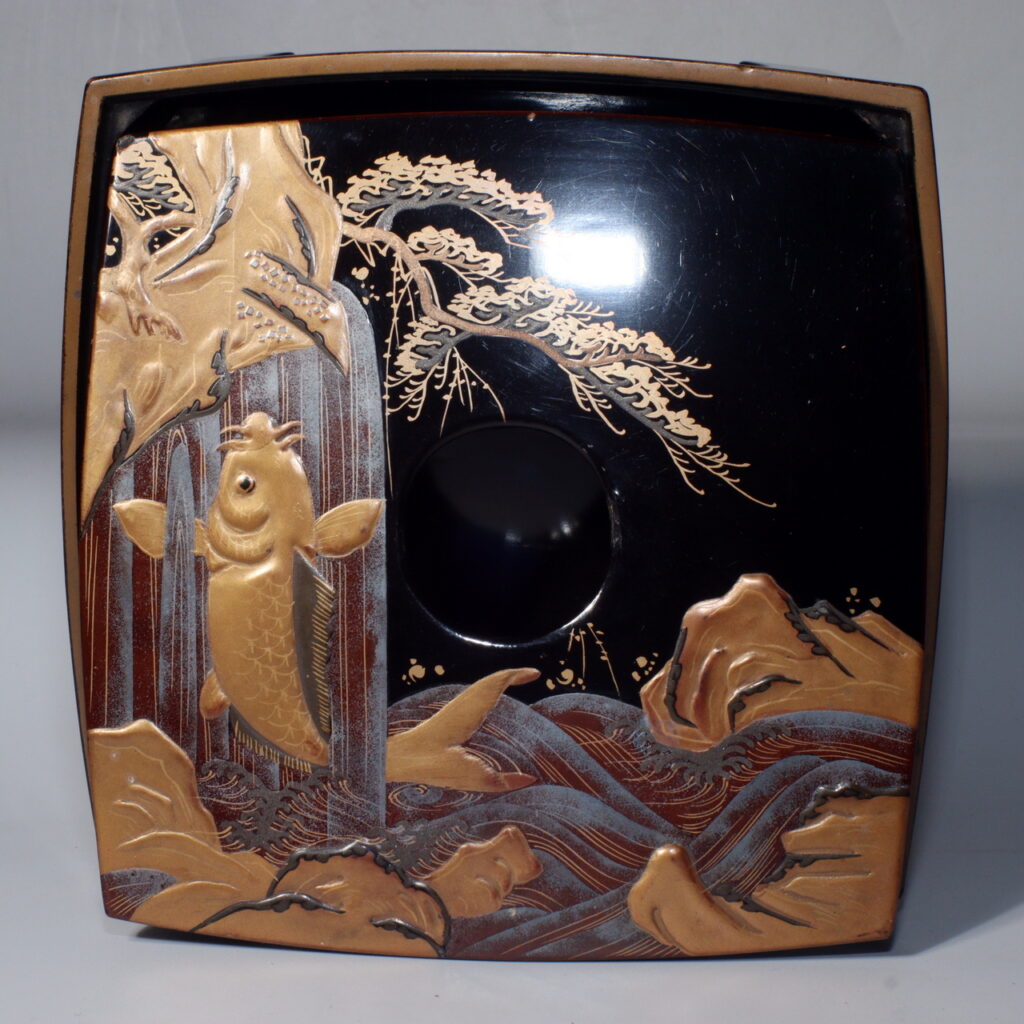
The motif of “Koi no Takinobori” (Carp Climbing the Waterfall) has long held a powerful place in East Asian iconography. It originates from an ancient Chinese legend that a carp, after swimming upstream and leaping over the Dragon Gate waterfall, transforms into a dragon. In Japan, this story came to represent resilience, courage, and success through perseverance. During the Edo period, it was a favored theme for samurai households, symbolizing not only personal advancement but also moral fortitude.
This sakazukidai would likely have been used in ceremonial settings or as part of an auspicious wedding gift set—an offering imbued with wishes for strength and prosperity.
The Beauty and Craftsmanship
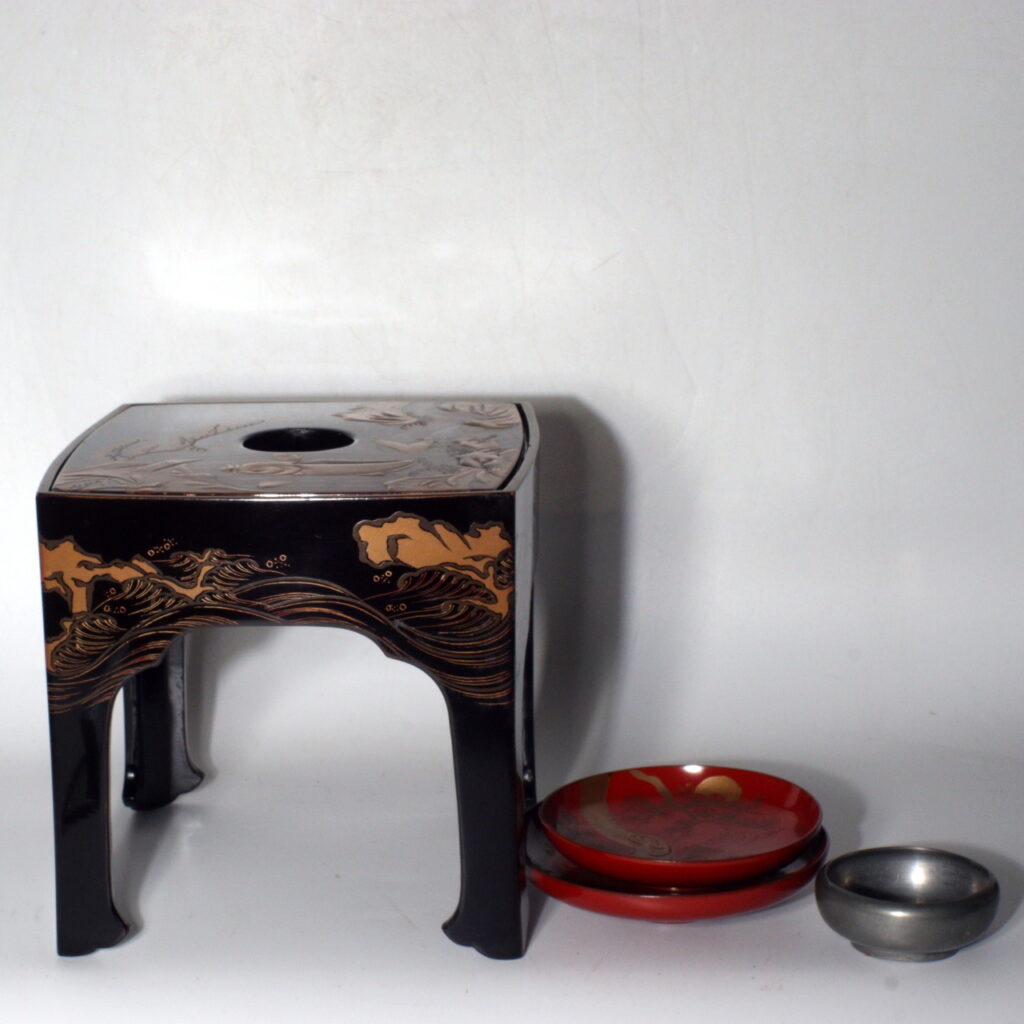
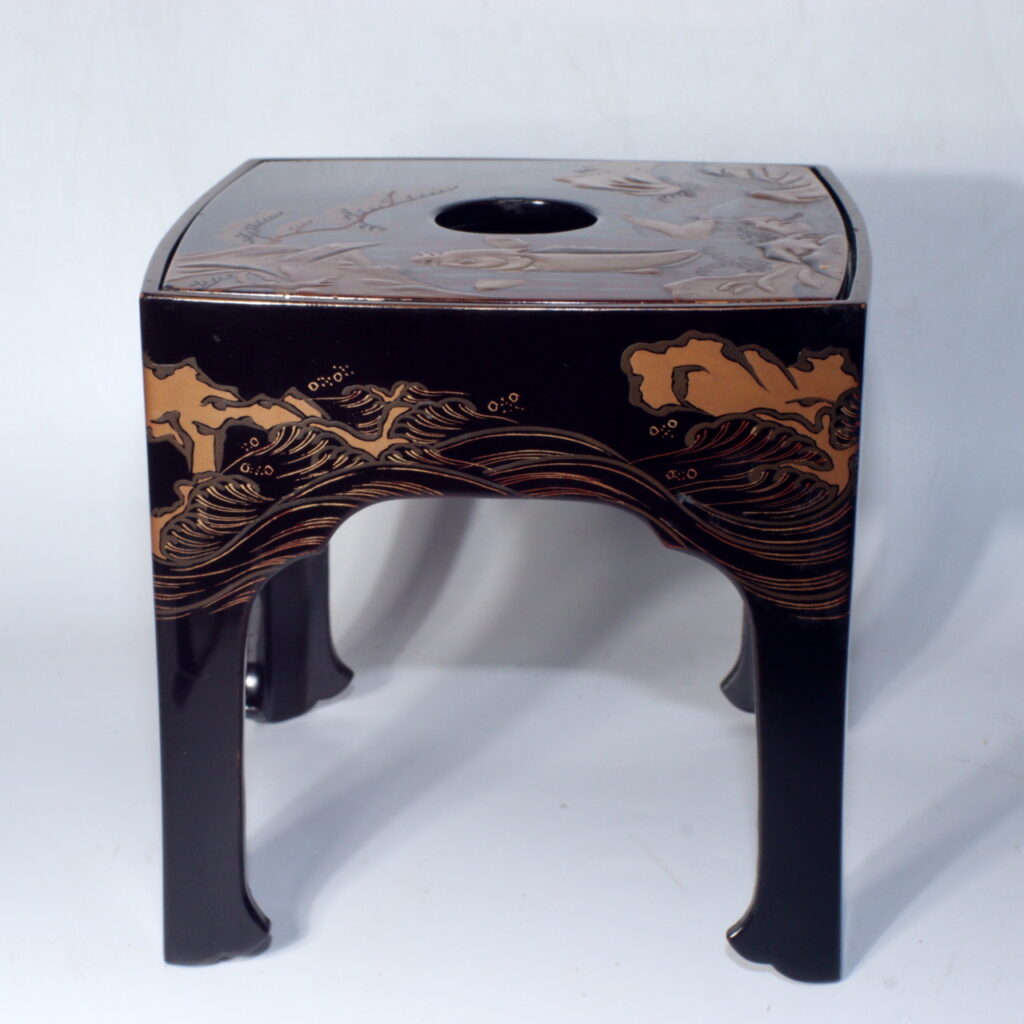
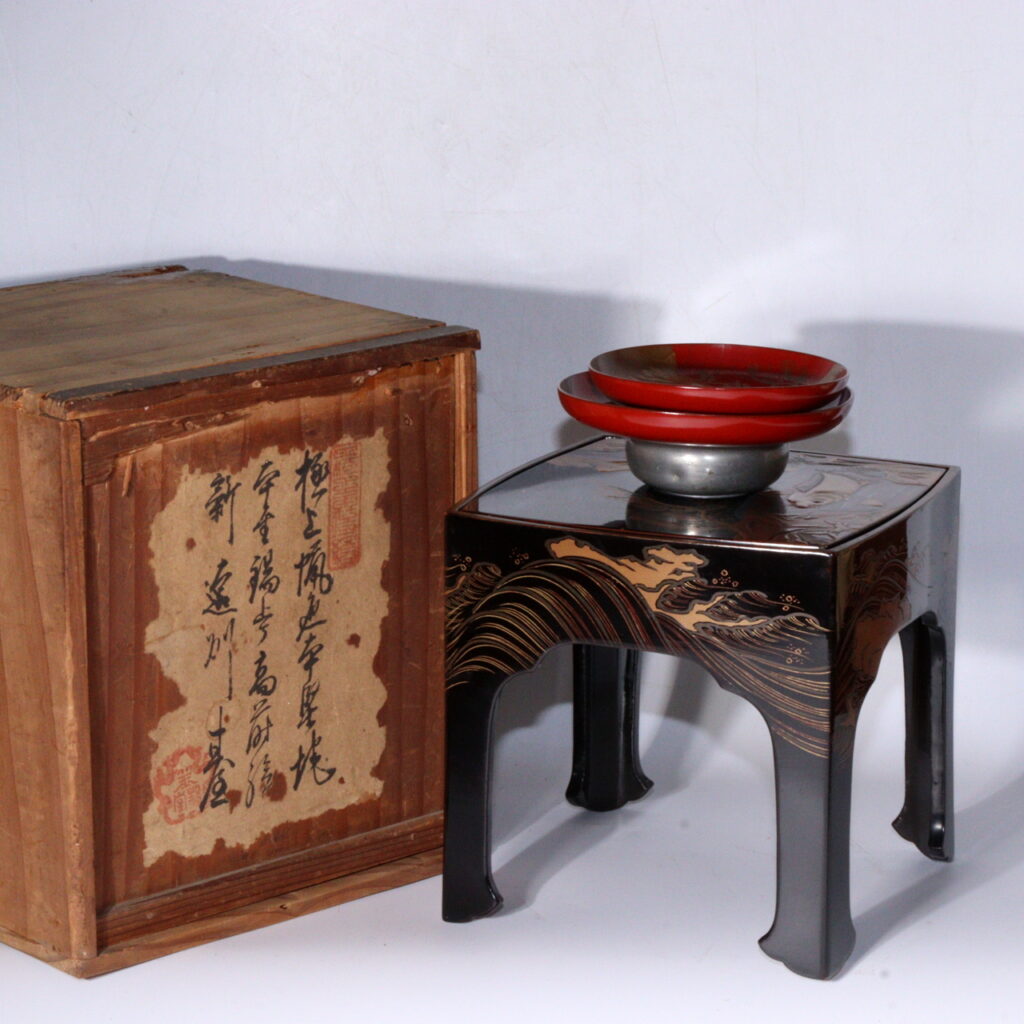
The stand is a masterwork of Japanese lacquer art, featuring a deep black urushi ground polished to a mirror-like sheen. Flowing waves in gold makie swirl dynamically across its sides, their rhythm and curves conveying the energy of a living current. The carp, rendered in fine takamakie, seems to defy gravity as it ascends the torrent—a metaphor for the soul’s striving toward enlightenment and achievement.
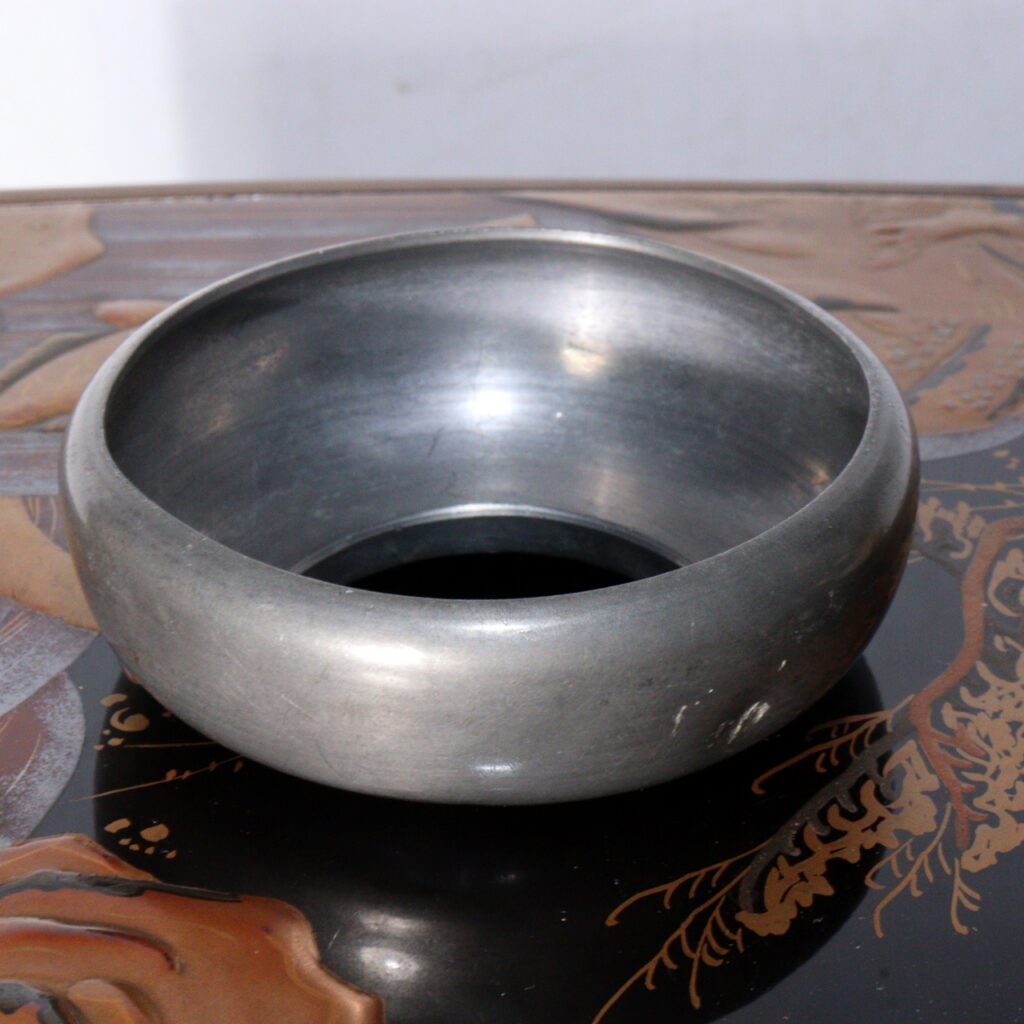
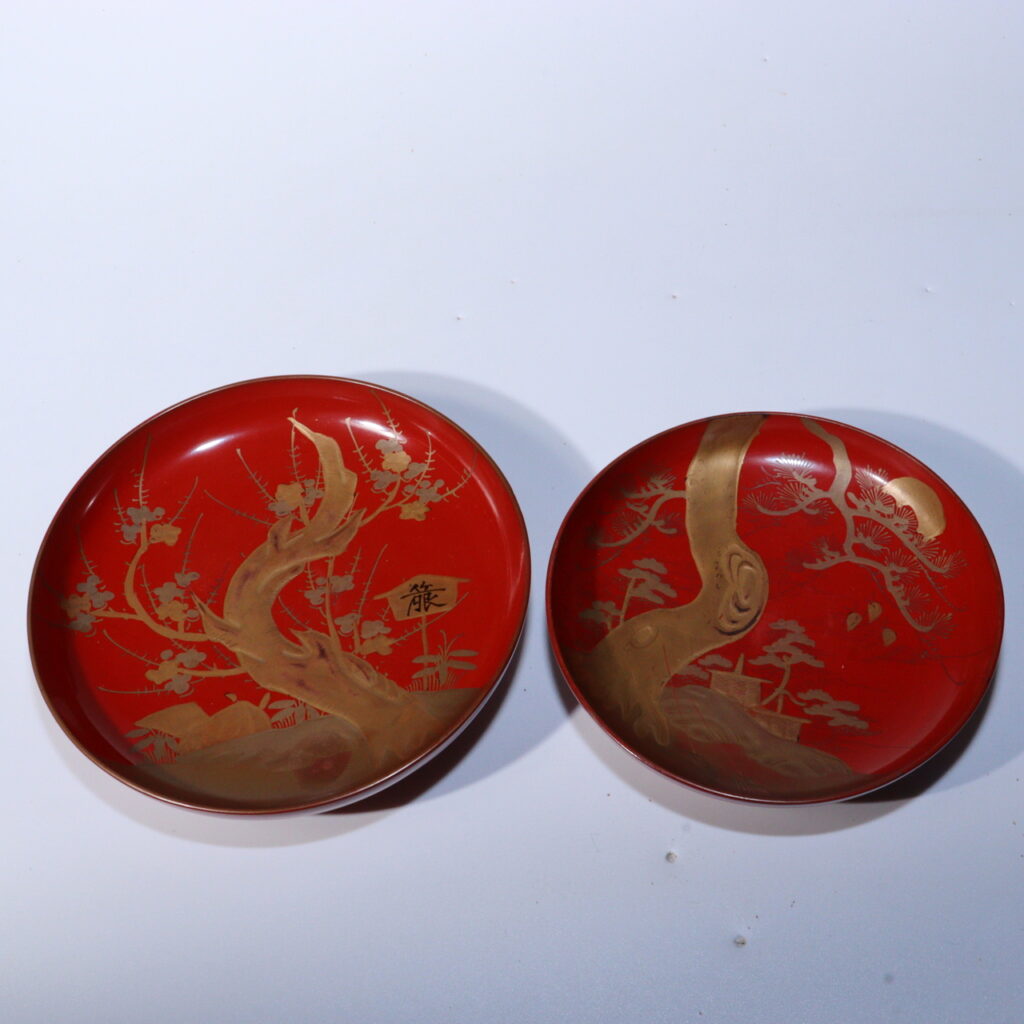
The accompanying red lacquer sakazuki (sake cups), accented with subtle gold motifs, harmonize beautifully with the stand, balancing vigor with elegance. The original wooden tomobako box, bearing hand-brushed calligraphy, adds an invaluable layer of provenance and authenticity. Together, the ensemble showcases both the aesthetic refinement and the cultural depth of the Edo–Meiji transition—a time when Japan’s artisans combined classical motifs with evolving modern sensibilities.
Unlike ornate Chinese porcelain known for its glossy opulence, Japanese lacquerware celebrates wabi-sabi—a quiet beauty born of craftsmanship, impermanence, and natural imperfection. The soft gleam of gold, the tactile smoothness of urushi, and the disciplined linework reveal a sense of spiritual calm beneath artistic precision.
Its Value for Collectors Worldwide
For collectors of Japanese antiques and lacquerware, this sakazukidai represents not only artistic excellence but also cultural heritage. Works of this kind bridge Japan’s Edo-period artisanal tradition and the modernization of the Meiji era, marking a pivotal point in the evolution of Japanese decorative arts.
Today, such pieces are sought by collectors, tea practitioners, and museums for their timeless design, symbolic richness, and impeccable traditional craftsmanship. Whether displayed in a contemporary home or used in formal tea gatherings, it stands as both a decorative treasure and a spiritual emblem—a reminder of the human capacity to rise against all odds.
In a world increasingly fascinated by Japanese aesthetics, the carp climbing the waterfall continues to resonate deeply as an enduring symbol of transformation and ambition. This sakazukidai, with its balance of technical artistry and symbolic depth, offers not just beauty, but inspiration.
Conclusion
This Late Edo–Meiji Takamakie Sakazukidai exemplifies the highest ideals of Japanese lacquer art, where symbolism and craftsmanship merge in harmony. From the artistry of its raised makie waves to the subtle red gleam of the accompanying sake cups, it evokes a story of perseverance, prosperity, and refined taste.
Explore this remarkable piece here:
🔗 View the item on Koedo Sun Art
If this piece has already found its new home, please explore our other Japanese antique collections here:
🔗 https://koedo-sun-art.com