

The Quiet Brilliance of Japan’s Folk Ceramic Tradition
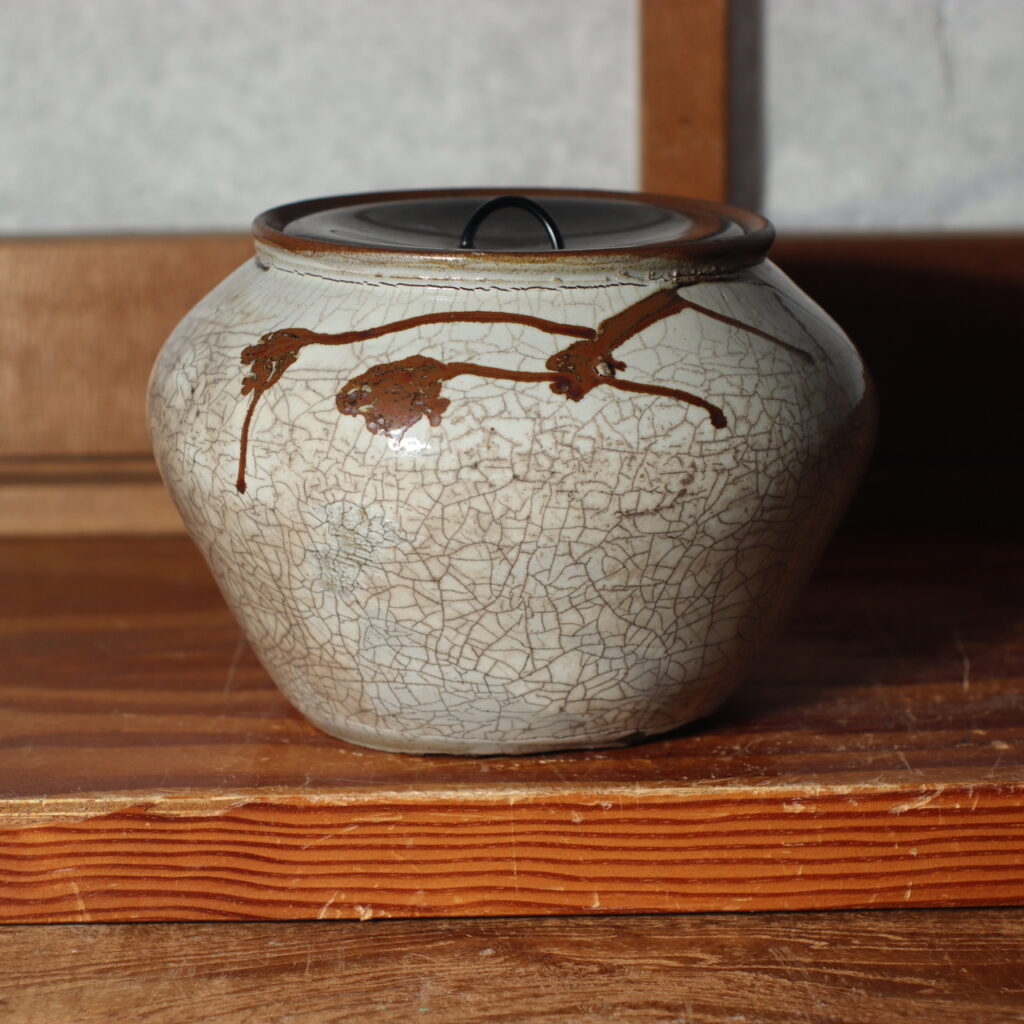
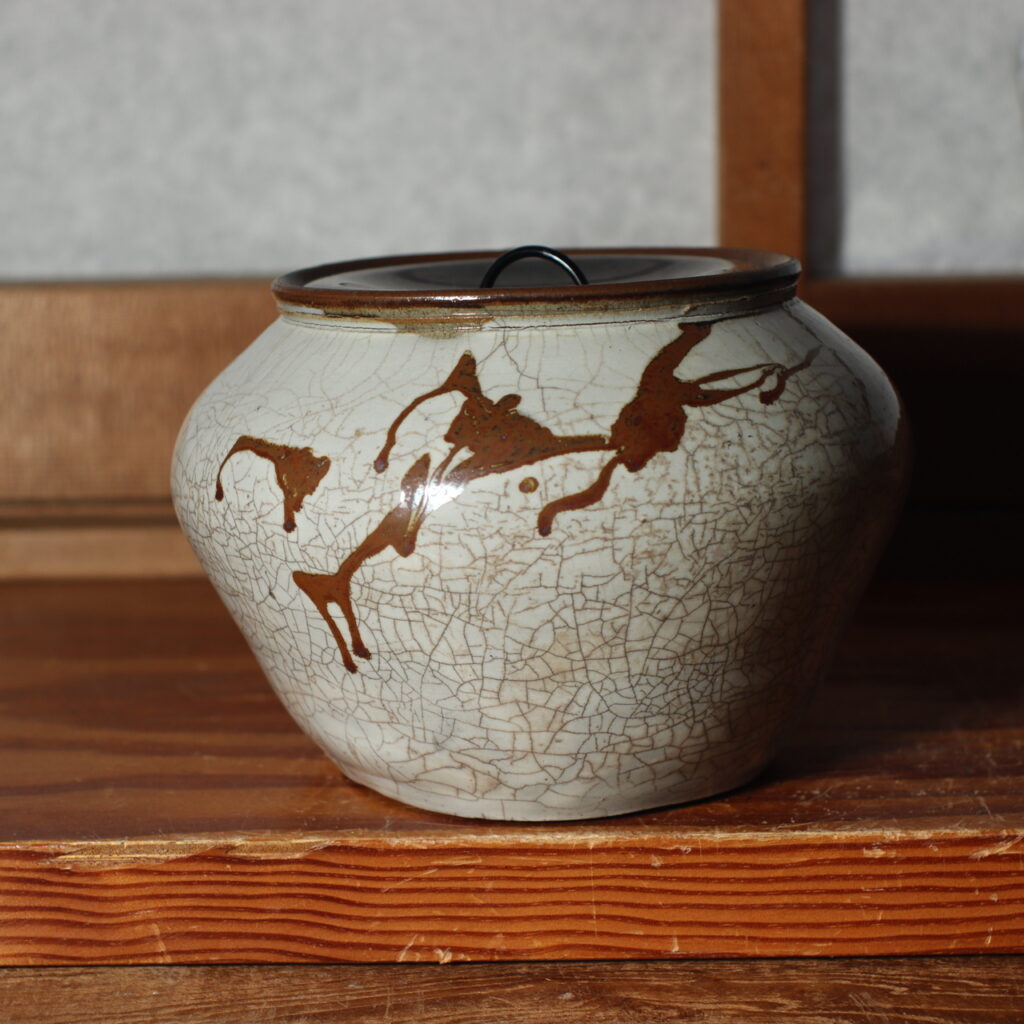
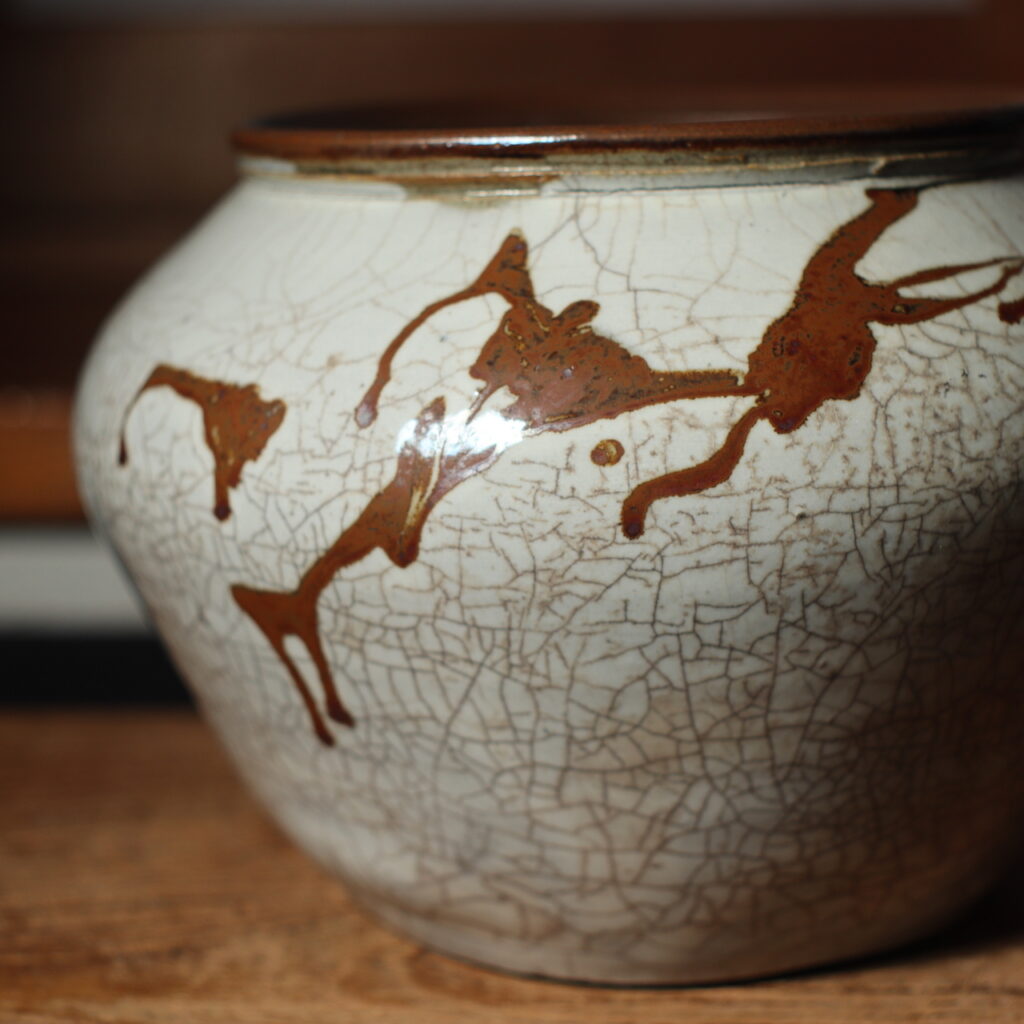
Among the many schools of Japanese ceramics, few embody the beauty of imperfection and natural harmony quite like Tanba ware (Tanba-yaki). This exquisite mizusashi (water jar), dating from the late Edo period (19th century), reflects not only the technical mastery of the potters of Hyogo Prefecture but also the deep spiritual philosophy that underlies traditional Japanese folk art.
With its softly rounded form, fine crackle glaze, and abstract slip patterns, this jar captures the essence of wabi-sabi — the Japanese appreciation for transience, simplicity, and natural irregularity. It is not a loud or decorative work, but rather a vessel that whispers of history, craftsmanship, and quiet beauty.
The Story Behind This Piece
Tanba ware, one of Japan’s Six Ancient Kilns (Rokkoyo), originated over 800 years ago in what is now Hyogo Prefecture. Its roots lie in the rustic pottery made for everyday use — water jars, storage containers, and tea utensils that evolved naturally alongside Japan’s agrarian culture.
By the Edo period (1603–1868), Tanba potters began to refine their techniques while retaining the earthy honesty of folk ceramics. This particular piece belongs to the lineage of white Tanba ware, a style admired for its restrained palette and serene surface.
The philosopher and founder of the Mingei (Folk Craft) Movement, Yanagi Sōetsu, once compared the white hue of Tanba ware to the refined porcelain of China’s Song dynasty — not because of perfection, but because of the spiritual purity it conveys. In his view, the natural ash glazes, subtle textures, and slight irregularities found in Tanba ware reflect the “beauty of use” — the soul of craftsmanship born from the everyday life of common people.
The Beauty and Craftsmanship
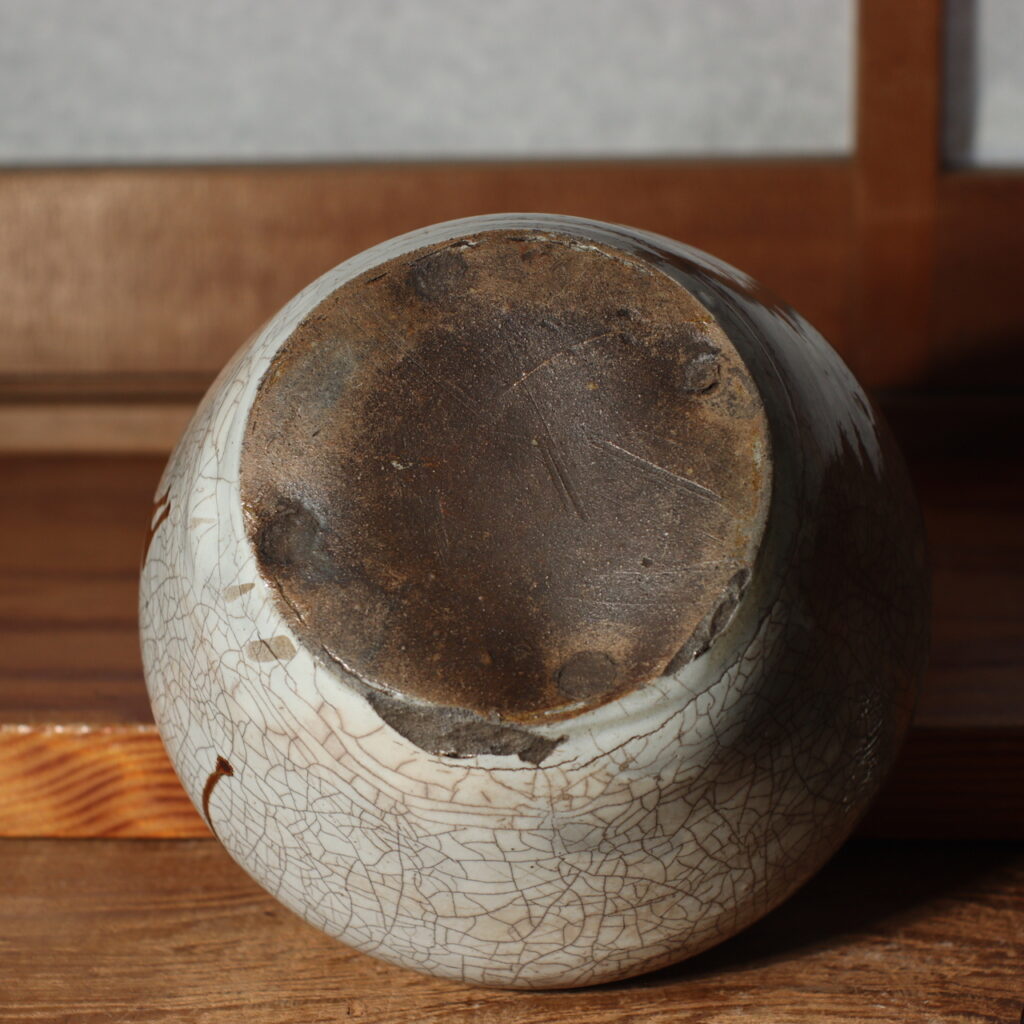
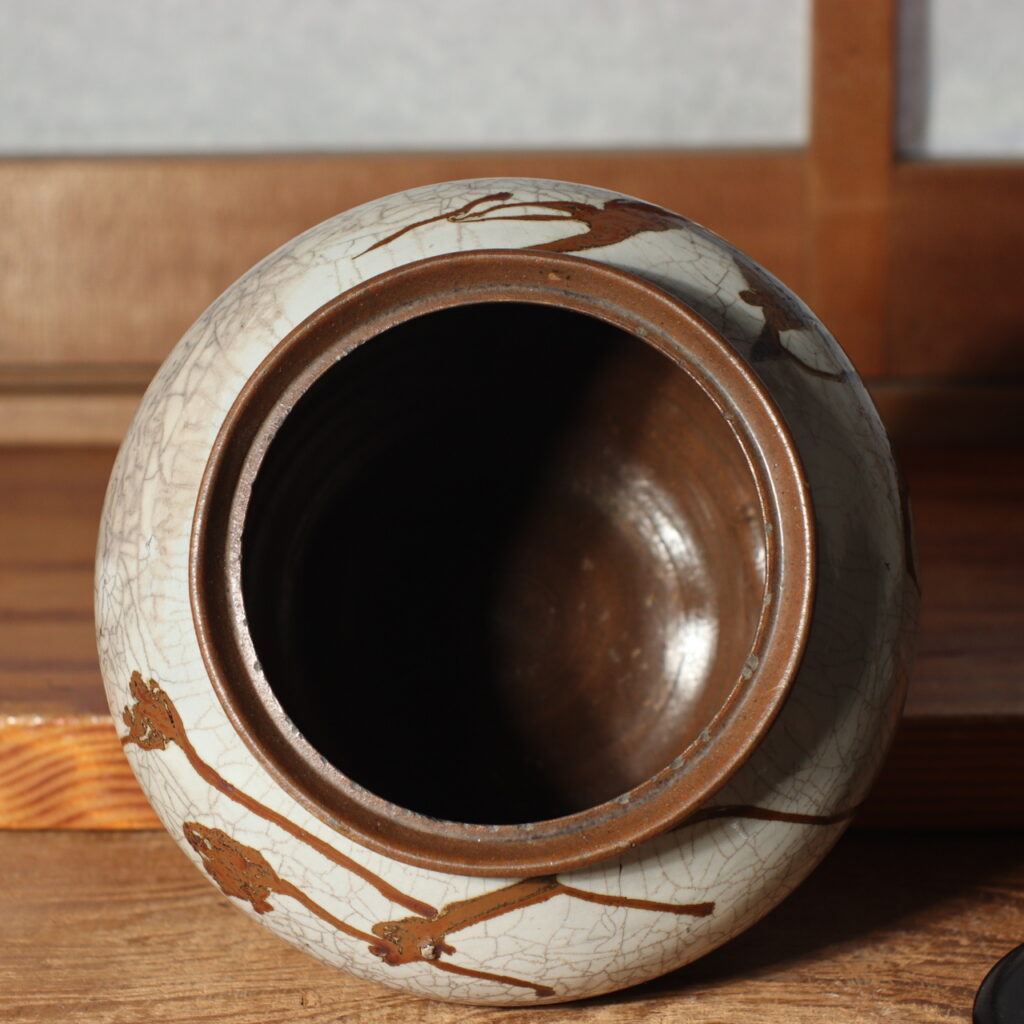
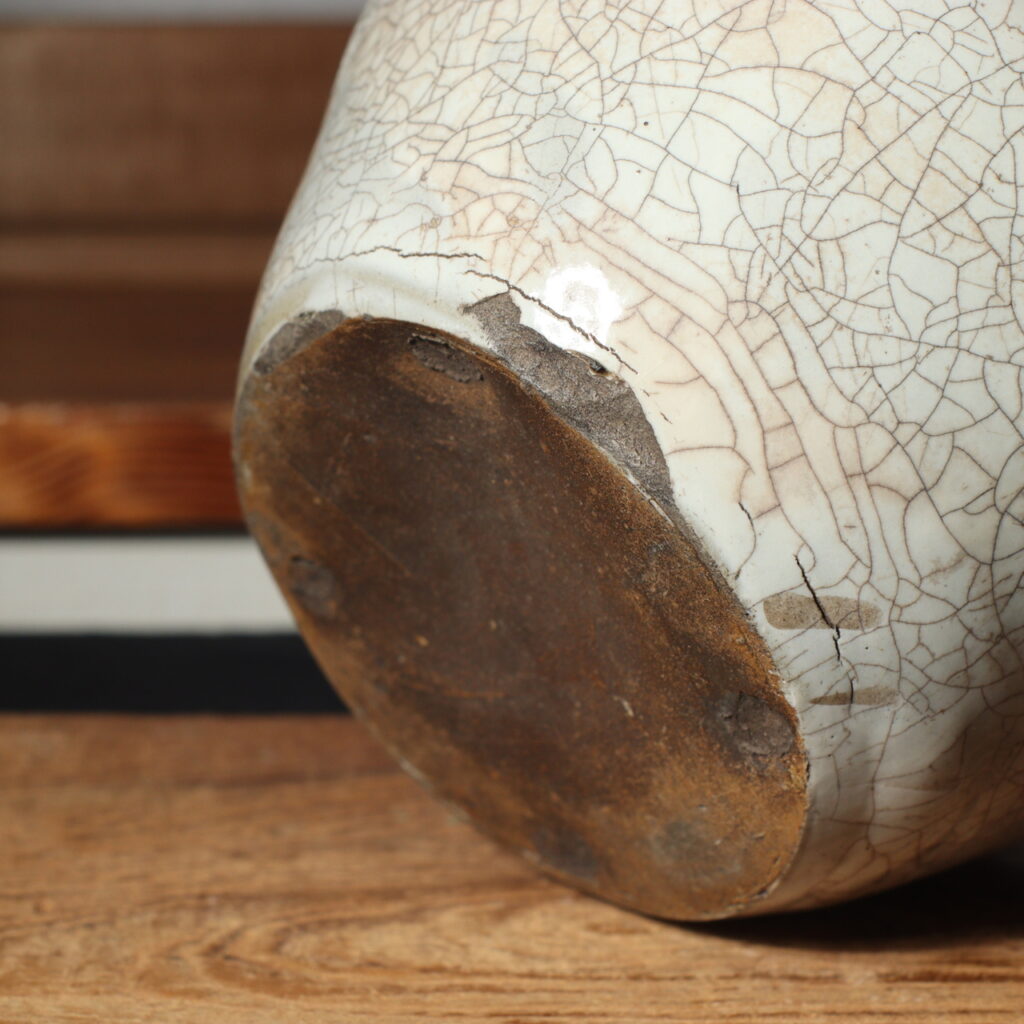
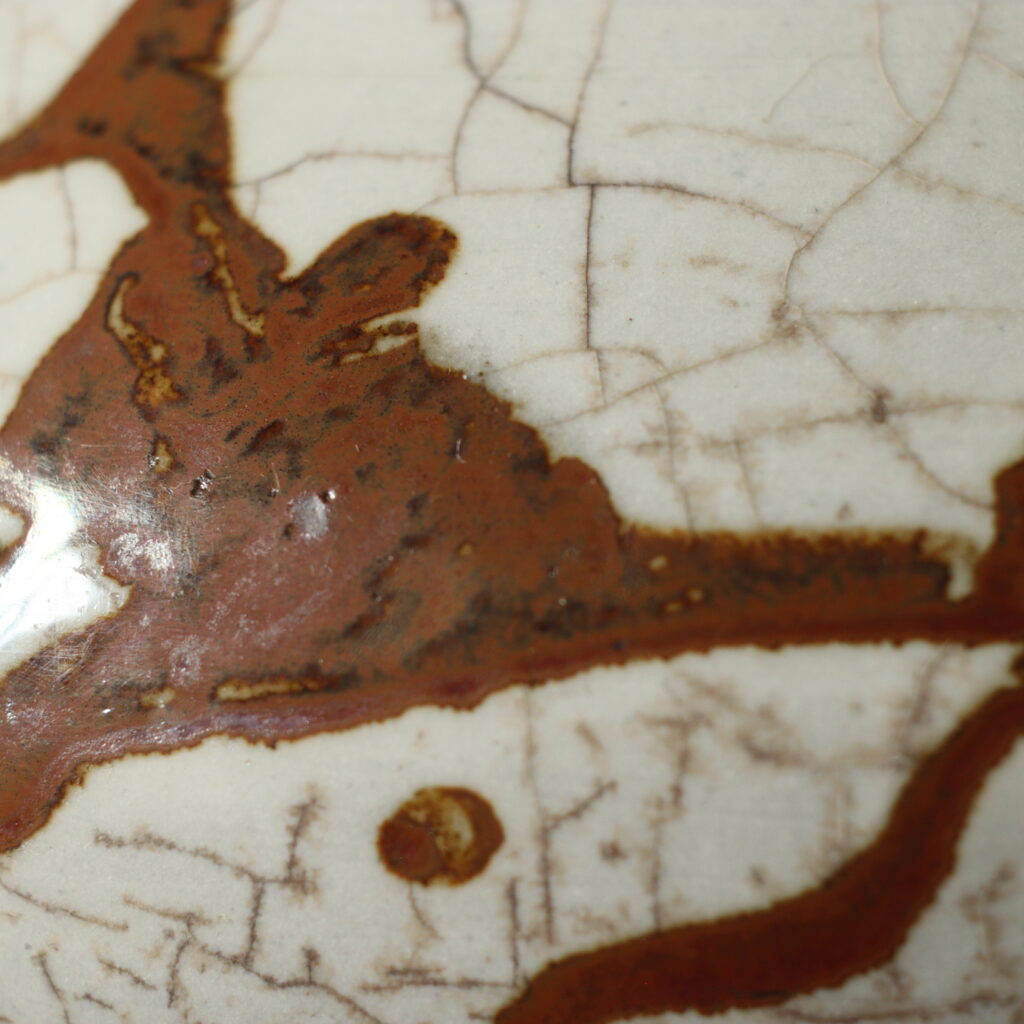
This mizusashi is a superb example of Tanba ware at its finest. The vessel is crafted from iron-rich clay, giving the body a warm brown tone visible beneath the white slip glaze. Across its surface, graceful drip patterns—created by brushing or trailing slip—add dynamic contrast and individuality to the piece.
Over time, a fine network of crazing (crackle lines) has developed across the glaze, a natural phenomenon prized by tea connoisseurs for its expression of age and authenticity. These crackles are not flaws but a visible record of the ceramic’s life — a dialogue between fire, earth, and time.
The lid, with its simple ring handle, completes the composition, balancing functionality with elegance. Every curve, line, and imperfection reveals the intuitive skill of the potter, guided by experience rather than rigid design.
Unlike ornate Chinese porcelain, which often seeks precision and brilliance, Tanba ware celebrates restraint and warmth. Its power lies in quiet confidence — in forms that feel at home in both rustic tea huts and modern interiors alike.
Its Value for Collectors Worldwide
To collectors and scholars of Japanese antiques, this mizusashi represents more than a vessel; it is a philosophical statement in clay. It stands as a testament to traditional Japanese design and the mingei spirit — the idea that beauty resides in honest, handcrafted objects made for daily life.
Its value lies in:
- Historical authenticity – A late Edo to early Meiji artifact rooted in centuries of Tanba tradition.
- Aesthetic refinement – A perfect example of wabi-sabi’s quiet balance between simplicity and imperfection.
- Material and technique – Iron-rich Tanba clay, white slip glaze, and natural aging that enhances its beauty over time.
- Cultural relevance – Closely tied to the tea ceremony and folk philosophy cherished in Japanese culture.
Today, such pieces are appreciated not only by antique connoisseurs but also by tea masters, interior designers, and collectors of minimalist art, who see in Tanba ware a profound harmony between nature and human touch.
Conclusion & Product Link
This Japanese Antique Tanba Ware Mizusashi exemplifies the heart of Japan’s ceramic heritage — a vessel born of earth, fire, and centuries of quiet tradition. Its gentle lines, fine crackles, and soft hues invite contemplation and admiration. Whether displayed in a tea room or an art collection, it stands as a timeless reminder of craftsmanship guided by nature and humility.
👉 View this item here:
https://koedo-sun-art.com/search?q=PV211&options%5Bprefix%5D=last
If this piece has already found its new home, please explore our other Japanese antique collections here:
🔗 https://koedo-sun-art.com